
Pelvic Ultrasound
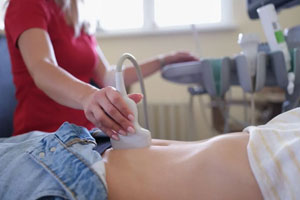
Pelvic Ultrasound
Pelvic Ultrasound is a safe, painless, and non-invasive imaging examination used to evaluate the organs and structures within the pelvis. In women, it assesses the uterus, ovaries, cervix, endometrium, and surrounding pelvic structures, while in men it helps evaluate the urinary bladder, prostate, seminal vesicles, and other pelvic organs. It plays an essential role in diagnosing pelvic pain, urinary symptoms, reproductive disorders, and various pelvic abnormalities.
At Dr. Dere Sonography & X-Ray Centre, Pelvic Ultrasound examinations are performed by Dr. Prajakta Samir Dere, Consultant Radiologist with specialized expertise in Obstetric, Fetal & Gynecological Imaging. Using advanced high-resolution ultrasound technology, every examination is performed with exceptional precision to provide detailed evaluation of pelvic organs while ensuring patient comfort, privacy, and accurate diagnosis.
Pelvic Ultrasound may be performed as a Transabdominal Ultrasound or, when clinically indicated, a Transvaginal Ultrasound (TVS) for women. The choice of examination depends on your symptoms, age, medical history, and the clinical information required by your treating doctor.
Whether you are experiencing pelvic pain, abnormal menstrual bleeding, infertility, urinary symptoms, pelvic swelling, or require routine evaluation of the pelvic organs, Pelvic Ultrasound provides valuable diagnostic information that helps your doctor determine the underlying cause and plan appropriate treatment.
Conditions Evaluated During Pelvic Ultrasound
Pelvic Ultrasound provides comprehensive imaging of the pelvic organs and helps diagnose a wide range of gynecological, urological, and pelvic conditions.
- Uterine fibroids.
- Ovarian cysts and ovarian masses.
- Polycystic Ovarian Syndrome (PCOS).
- Adenomyosis and endometrial abnormalities.
- Pelvic inflammatory disease (PID).
- Abnormal uterine bleeding.
- Infertility-related conditions.
- Urinary bladder disorders.
- Prostate enlargement (in men).
- Pelvic masses and fluid collections.
- Congenital pelvic abnormalities.
- Routine pelvic health evaluation.
When is a Pelvic Ultrasound Recommended?
Your doctor may recommend a Pelvic Ultrasound whenever a detailed assessment of the pelvic organs is required for diagnosis, treatment planning, or follow-up of known medical conditions.
- Pelvic or lower abdominal pain.
- Irregular or heavy menstrual bleeding.
- Abnormal vaginal bleeding.
- Difficulty conceiving or infertility evaluation.
- Suspected ovarian cysts or uterine fibroids.
- Urinary symptoms such as difficulty passing urine or frequent urination.
- Evaluation of bladder or prostate disorders.
- Follow-up of previously diagnosed pelvic conditions.
- Routine pelvic examination whenever advised by your doctor.
Signs & Symptoms That May Require a Pelvic Ultrasound
A Pelvic Ultrasound is recommended when symptoms suggest a condition affecting the pelvic organs. This examination helps identify the underlying cause of pelvic pain, urinary complaints, abnormal bleeding, reproductive disorders, and other pelvic abnormalities, allowing timely diagnosis and appropriate treatment.
- Persistent pelvic or lower abdominal pain.
- Heavy, irregular, or painful menstrual periods.
- Abnormal vaginal bleeding or postmenopausal bleeding.
- Difficulty conceiving or infertility evaluation.
- Pelvic swelling or a palpable pelvic mass.
- Frequent urination, painful urination, or difficulty emptying the bladder.
- Suspected ovarian cysts, fibroids, or prostate enlargement.
- Follow-up of previously diagnosed pelvic conditions.
- Routine pelvic health assessment as advised by your doctor.
What Does a Pelvic Ultrasound Assess?
Pelvic Ultrasound provides a comprehensive evaluation of the pelvic organs and surrounding structures, helping diagnose a wide range of gynecological, urological, and pelvic conditions with excellent accuracy.
Uterus Assessment (Women)
The uterus is evaluated for its size, shape, position, and internal structure to identify fibroids, adenomyosis, congenital uterine anomalies, and other uterine abnormalities.
Ovarian Assessment (Women)
Both ovaries are examined to assess ovarian cysts, ovarian masses, PCOS, follicular development, ovarian size, and other abnormalities affecting reproductive health.
Endometrial Evaluation
The endometrial lining is carefully assessed for thickness and appearance to identify polyps, endometrial hyperplasia, retained products, and other conditions associated with abnormal uterine bleeding.
Urinary Bladder Assessment
The urinary bladder is evaluated for wall thickness, stones, masses, residual urine volume, and other abnormalities that may cause urinary symptoms.
Prostate Assessment (Men)
In male patients, Pelvic Ultrasound helps assess prostate size, enlargement, urinary obstruction, post-void residual urine, and related lower urinary tract conditions.
Pelvic Masses & Fluid Collections
The examination helps identify pelvic masses, fluid collections, abscesses, or enlarged lymph nodes while determining their size, location, and imaging characteristics.
Infertility Evaluation
Pelvic Ultrasound plays an important role in infertility investigations by evaluating the uterus, ovaries, endometrium, and other pelvic structures that may influence conception.
Overall Pelvic Health
All pelvic organs are systematically examined to provide a detailed assessment that supports accurate diagnosis, appropriate treatment planning, and long-term pelvic health.
How is a Pelvic Ultrasound Performed?
Pelvic Ultrasound is a safe, painless, and non-invasive imaging examination performed using advanced ultrasound technology. Depending on your symptoms and clinical indication, the examination may be performed through the abdomen (Transabdominal Ultrasound) or, in women, as a Transvaginal Ultrasound (TVS) for a more detailed assessment. The procedure generally takes 15 to 30 minutes.
- Your medical history, symptoms, and previous imaging reports are reviewed before the examination.
- A comfortably full bladder may be required for a Transabdominal Pelvic Ultrasound.
- When clinically indicated, a Transvaginal Ultrasound may be performed for detailed pelvic evaluation.
- The pelvic organs are systematically examined using high-resolution ultrasound imaging.
- Detailed measurements and diagnostic images are carefully recorded.
- A comprehensive ultrasound report is prepared to assist your treating doctor in further management.
Benefits of a Pelvic Ultrasound
Pelvic Ultrasound is one of the most effective diagnostic investigations for evaluating pelvic organs because it provides accurate, real-time imaging without exposing patients to radiation.
- Comprehensive evaluation of pelvic organs in both women and men.
- Early detection of uterine, ovarian, bladder, and prostate abnormalities.
- Accurate diagnosis of fibroids, ovarian cysts, and pelvic masses.
- Supports infertility evaluation and reproductive health assessment.
- Assists in diagnosing urinary bladder and prostate disorders.
- Safe, radiation-free imaging suitable for repeated follow-up examinations.
- Supports early diagnosis and personalized treatment planning.
- Provides reliable information for comprehensive pelvic healthcare.
Preparation Before a Pelvic Ultrasound
Pelvic Ultrasound is a simple, safe, and non-invasive imaging examination that requires minimal preparation. The preparation depends on whether a Transabdominal or Transvaginal Ultrasound is recommended. Following the instructions provided by your doctor or radiologist helps obtain clear images and ensures an accurate assessment of the pelvic organs.
- Carry your doctor's prescription along with previous ultrasound reports and relevant medical records.
- A comfortably full bladder is usually required for a Transabdominal Pelvic Ultrasound unless advised otherwise.
- For a Transvaginal Ultrasound (TVS), you may be asked to empty your bladder before the examination.
- Wear loose and comfortable clothing for a convenient examination.
- Arrive at the diagnostic centre 10 to 15 minutes before your scheduled appointment.
- Follow any additional preparation instructions provided by your doctor or radiologist.
Is a Pelvic Ultrasound Safe?
Yes. Pelvic Ultrasound is a completely safe, painless, and radiation-free imaging examination that uses high-frequency sound waves to evaluate the pelvic organs. It is widely recommended for both women and men and can be safely repeated whenever follow-up imaging is required.
At Dr. Dere Sonography & X-Ray Centre, every Pelvic Ultrasound is performed using advanced ultrasound technology while maintaining the highest standards of patient comfort, privacy, hygiene, and diagnostic accuracy.
Frequently Asked Questions
What is the difference between a Pelvic Ultrasound and a Transvaginal Ultrasound?
A Pelvic Ultrasound usually refers to a Transabdominal examination performed through the abdomen. A Transvaginal Ultrasound (TVS) provides a more detailed evaluation of the female pelvic organs by placing a specially designed ultrasound probe gently inside the vagina when clinically indicated.
Do I need a full bladder for a Pelvic Ultrasound?
Yes. A comfortably full bladder is generally required for a Transabdominal Pelvic Ultrasound because it helps improve visualization of the pelvic organs. Your doctor will inform you if different preparation is needed.
Can a Pelvic Ultrasound detect fibroids and ovarian cysts?
Yes. Pelvic Ultrasound is one of the most effective imaging investigations for diagnosing uterine fibroids, ovarian cysts, pelvic masses, and many other gynecological conditions.
Can men also undergo a Pelvic Ultrasound?
Yes. In men, Pelvic Ultrasound is commonly performed to evaluate the urinary bladder, prostate gland, post-void residual urine, and other pelvic structures.
How long does a Pelvic Ultrasound take?
Most Pelvic Ultrasound examinations are completed within 15 to 30 minutes, depending on the type of examination and the clinical assessment required.
Why Choose Dr. Prajakta Samir Dere for Pelvic Ultrasound?
- Consultant Radiologist with specialized expertise in Obstetric, Fetal & Gynecological Imaging.
- Advanced high-resolution pelvic ultrasound for accurate diagnosis of gynecological and pelvic disorders.
- Comprehensive evaluation of the uterus, ovaries, endometrium, urinary bladder, prostate, and surrounding pelvic structures.
- Expert assessment of fibroids, ovarian cysts, PCOS, infertility-related conditions, pelvic masses, and urinary tract abnormalities.
- Evidence-based reporting using modern ultrasound technology for reliable clinical decision-making.
- Compassionate, confidential, and patient-centred care in a comfortable environment.
- Prompt and comprehensive reports to support timely treatment planning.
- Trusted diagnostic imaging services focused on accurate diagnosis and better patient outcomes.
Comprehensive Pelvic Imaging for Accurate Diagnosis
Pelvic Ultrasound is an essential diagnostic investigation for evaluating a wide range of gynecological, urological, and pelvic conditions. Whether you are experiencing pelvic pain, abnormal bleeding, urinary symptoms, infertility, or require routine pelvic assessment, timely ultrasound examination helps identify the underlying cause and supports appropriate treatment for improved long-term health.
Schedule your Pelvic Ultrasound with Dr. Prajakta Samir Dere at Dr. Dere Sonography & X-Ray Centre for advanced pelvic imaging, expert diagnosis, and compassionate patient care using state-of-the-art ultrasound technology.