
Infertility Ultrasound
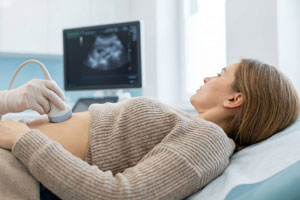
Infertility Ultrasound
Infertility Ultrasound is a specialized pelvic ultrasound examination that plays a vital role in evaluating female fertility. It helps assess the uterus, ovaries, endometrial lining, ovarian reserve, follicular development, and ovulation, providing essential information that supports infertility diagnosis, fertility treatment planning, and successful conception.
At Dr. Dere Sonography & X-Ray Centre, Infertility Ultrasound examinations are performed by Dr. Prajakta Samir Dere, Consultant Radiologist with specialized expertise in Obstetric, Fetal & Gynecological Imaging. Using advanced high-resolution ultrasound technology, every examination provides detailed visualization of the female reproductive organs, allowing accurate assessment of fertility-related conditions while maintaining complete patient comfort and privacy.
Infertility Ultrasound is commonly performed as a Transvaginal Ultrasound (TVS), as it provides superior visualization of the uterus, ovaries, follicles, and endometrium. It is an important part of infertility evaluation and is frequently used during ovulation monitoring, IVF cycles, IUI treatment, follicular tracking, and assessment of reproductive health.
Whether you are planning your first pregnancy, experiencing difficulty conceiving, undergoing fertility treatment, or require evaluation for recurrent pregnancy loss, Infertility Ultrasound provides valuable diagnostic information that helps your fertility specialist develop the most appropriate treatment plan.
Conditions Evaluated During Infertility Ultrasound
Infertility Ultrasound provides a comprehensive evaluation of the female reproductive system and helps identify conditions that may affect fertility and successful conception.
- Follicular development and ovulation monitoring.
- Assessment of ovarian reserve.
- Polycystic Ovarian Syndrome (PCOS).
- Ovarian cysts.
- Uterine fibroids.
- Endometrial thickness and receptivity.
- Endometrial polyps.
- Adenomyosis.
- Congenital uterine abnormalities.
- Hydrosalpinx (when visible).
- Pelvic adhesions and pelvic abnormalities.
- Routine fertility assessment before assisted reproductive treatment.
When is an Infertility Ultrasound Recommended?
Your gynecologist or fertility specialist may recommend an Infertility Ultrasound as part of a detailed fertility evaluation or during assisted reproductive treatment to monitor ovulation and reproductive health.
- Difficulty conceiving after regular unprotected intercourse.
- Irregular or absent menstrual cycles.
- Ovulation monitoring.
- Follicular study during fertility treatment.
- IVF or IUI treatment planning.
- Evaluation of recurrent pregnancy loss.
- Suspected PCOS or ovarian disorders.
- Assessment of endometrial thickness before embryo transfer.
- Follow-up of infertility treatment.
- Whenever advised by your fertility specialist for comprehensive reproductive assessment.
Who Should Consider an Infertility Ultrasound?
An Infertility Ultrasound is recommended for women who are planning pregnancy, experiencing difficulty conceiving, or undergoing fertility treatment. It provides valuable information about ovulation, ovarian function, uterine health, and endometrial development, allowing fertility specialists to identify possible causes of infertility and optimize treatment.
- Women unable to conceive after regular unprotected intercourse.
- Women with irregular or absent ovulation.
- Patients diagnosed with PCOS.
- Women undergoing IVF, IUI, or ovulation induction.
- Women with recurrent pregnancy loss.
- Patients with suspected uterine or ovarian abnormalities.
- Women requiring follicular monitoring.
- Couples planning assisted reproductive treatment.
What Does an Infertility Ultrasound Assess?
Infertility Ultrasound provides a comprehensive evaluation of the female reproductive organs and helps determine factors that influence conception, implantation, and pregnancy. It plays an important role in fertility investigations as well as assisted reproductive procedures.
Follicular Development
The ovaries are examined to monitor the growth and maturation of ovarian follicles. This helps determine the timing of ovulation and identifies the most fertile period during natural conception or fertility treatment.
Ovulation Monitoring
Serial ultrasound examinations help confirm ovulation by assessing follicular growth, follicle rupture, and the formation of the corpus luteum, providing essential information during fertility treatment.
Endometrial Thickness & Receptivity
The endometrial lining is carefully evaluated for its thickness, appearance, and receptivity, which are important factors for successful embryo implantation and pregnancy.
Ovarian Assessment
Both ovaries are examined to assess ovarian reserve, ovarian volume, follicular count, ovarian cysts, PCOS, and other ovarian abnormalities that may affect fertility.
Uterine Assessment
The uterus is evaluated for fibroids, congenital uterine anomalies, adenomyosis, endometrial polyps, and other structural abnormalities that may interfere with conception or implantation.
Pelvic Assessment
The scan evaluates the pelvis for fluid collections, adhesions, pelvic masses, and other abnormalities that may contribute to infertility or chronic pelvic pain.
Monitoring Fertility Treatment
Infertility Ultrasound is routinely performed during IVF, IUI, ovulation induction, and follicular study cycles to monitor ovarian response, optimize treatment timing, and improve the chances of successful conception.
Overall Reproductive Health
All imaging findings are interpreted together to provide a comprehensive assessment of reproductive health, helping your fertility specialist develop an individualized treatment plan.
How is an Infertility Ultrasound Performed?
Infertility Ultrasound is usually performed as a Transvaginal Ultrasound (TVS), as it provides superior visualization of the uterus, ovaries, follicles, and endometrial lining. The examination is safe, painless, and generally completed within 15 to 30 minutes. In some situations, a Transabdominal Ultrasound may also be performed when clinically appropriate.
- Your medical history, menstrual history, and previous fertility investigations are reviewed before the examination.
- You may be asked to empty your bladder before a Transvaginal Ultrasound.
- The uterus, ovaries, follicles, and endometrial lining are examined in detail.
- Follicular size, endometrial thickness, and ovarian response are carefully measured and documented.
- Serial ultrasound examinations may be scheduled during the menstrual cycle for follicular monitoring.
- A detailed ultrasound report is prepared to guide further fertility treatment.
Benefits of an Infertility Ultrasound
Infertility Ultrasound is an essential part of fertility evaluation because it provides accurate information about ovulation, ovarian function, and uterine health, helping improve treatment outcomes.
- Accurate evaluation of the uterus and ovaries.
- Detailed follicular monitoring and ovulation assessment.
- Assessment of endometrial receptivity for implantation.
- Early detection of fertility-related abnormalities.
- Supports IVF, IUI, and ovulation induction treatment.
- Safe, radiation-free imaging with excellent diagnostic accuracy.
- Helps optimize fertility treatment planning and timing.
- Improves the chances of successful conception through precise reproductive assessment.
Preparation Before an Infertility Ultrasound
Infertility Ultrasound requires minimal preparation and is performed in a comfortable, private, and patient-friendly environment. Depending on the type of examination, your fertility specialist may recommend either a Transvaginal Ultrasound (TVS) or a Transabdominal Ultrasound. Following the recommended preparation helps ensure accurate assessment of the uterus, ovaries, follicles, and endometrial lining.
- Carry your doctor's prescription, previous ultrasound reports, fertility records, and laboratory investigations.
- For a Transvaginal Ultrasound (TVS), you will usually be asked to empty your bladder before the examination.
- If a Transabdominal Ultrasound is advised, a comfortably full bladder may be required.
- Wear loose and comfortable clothing for a convenient examination.
- Reach the diagnostic centre 10 to 15 minutes before your scheduled appointment.
- Follow the appointment schedule recommended by your fertility specialist, as scans are often performed on specific days of the menstrual cycle.
Is an Infertility Ultrasound Safe?
Yes. Infertility Ultrasound is a completely safe, painless, and radiation-free imaging examination that uses high-frequency sound waves to evaluate the female reproductive organs. It can be safely repeated multiple times during the menstrual cycle for follicular monitoring, ovulation assessment, IVF, or IUI treatment without any known harmful effects.
At Dr. Dere Sonography & X-Ray Centre, every Infertility Ultrasound is performed using advanced high-resolution ultrasound technology while maintaining complete patient privacy, comfort, and internationally accepted imaging protocols.
Frequently Asked Questions
What is an Infertility Ultrasound used for?
Infertility Ultrasound helps evaluate the uterus, ovaries, follicles, endometrial lining, ovulation, and other reproductive structures to identify factors that may affect fertility and assist in treatment planning.
Is Infertility Ultrasound the same as Follicular Monitoring?
Follicular Monitoring is an important part of Infertility Ultrasound. It involves performing serial ultrasound examinations during the menstrual cycle to monitor follicle growth, ovulation, and endometrial development.
How many ultrasound scans are required during fertility treatment?
The number of scans varies depending on your treatment plan. Women undergoing IVF, IUI, or ovulation induction may require multiple ultrasound examinations during a single menstrual cycle for accurate monitoring.
Is a Transvaginal Ultrasound necessary for infertility evaluation?
In most cases, yes. A Transvaginal Ultrasound provides superior visualization of the uterus, ovaries, follicles, and endometrial lining, making it the preferred imaging technique for fertility assessment.
Can an Infertility Ultrasound improve the chances of pregnancy?
While the ultrasound itself does not treat infertility, it provides essential diagnostic information that helps your fertility specialist accurately time ovulation, monitor treatment response, and plan the most appropriate fertility management strategy.
Why Choose Dr. Prajakta Samir Dere for Infertility Ultrasound?
- Consultant Radiologist with specialized expertise in Obstetric, Fetal & Gynecological Imaging.
- Advanced Transvaginal Ultrasound (TVS) for detailed fertility assessment and follicular monitoring.
- Comprehensive evaluation of the uterus, ovaries, ovarian reserve, follicles, and endometrial lining.
- Expert support for IVF, IUI, ovulation induction, and other assisted reproductive treatments.
- Accurate, evidence-based reporting using advanced ultrasound technology.
- Personalized, confidential, and compassionate care throughout your fertility journey.
- Prompt reporting to assist fertility specialists in optimizing treatment timing.
- Trusted reproductive imaging services focused on improving fertility outcomes.
Supporting Your Journey Towards Parenthood
Every fertility journey is unique, and accurate diagnosis is the first step toward successful treatment. Infertility Ultrasound provides detailed information about ovulation, ovarian function, uterine health, and endometrial development, enabling your fertility specialist to create a personalized treatment plan that maximizes your chances of conception.
Schedule your Infertility Ultrasound with Dr. Prajakta Samir Dere at Dr. Dere Sonography & X-Ray Centre for advanced fertility imaging, expert reproductive assessment, and compassionate women's healthcare using state-of-the-art ultrasound technology.