
Growth Scan
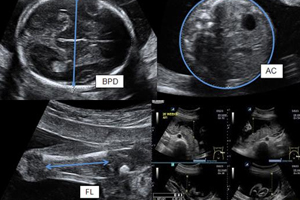
Growth Scan
A Growth Scan is an important third-trimester pregnancy ultrasound performed to monitor your baby's growth, development, and overall well-being. It helps assess whether your baby is growing appropriately for the gestational age while evaluating the placenta, amniotic fluid, fetal position, and blood circulation. This examination provides valuable information that helps your obstetrician ensure a healthy pregnancy and plan the safest possible delivery.
At Dr. Dere Sonography & X-Ray Centre, Growth Scans are performed by Dr. Prajakta Samir Dere, Consultant Radiologist with specialized expertise in Obstetric, Fetal & Gynecological Imaging. Using advanced ultrasound technology and internationally accepted fetal imaging protocols, every scan is performed with exceptional precision to evaluate your baby's growth and detect any concerns that may require closer monitoring.
A Growth Scan is usually recommended during the third trimester, commonly between 28 and 40 weeks of pregnancy, depending on your obstetrician's advice. The examination measures your baby's head, abdomen, and thigh bone, estimates fetal weight, evaluates fetal movements, assesses amniotic fluid volume, examines placental health, and determines the baby's position in preparation for childbirth.
Whether your pregnancy is routine or considered high-risk, a Growth Scan plays a crucial role in ensuring your baby continues to grow normally while helping identify conditions such as fetal growth restriction (FGR), large-for-gestational-age babies, reduced amniotic fluid, or placental insufficiency. Early identification of these conditions allows timely medical intervention and supports better pregnancy outcomes.
Conditions Evaluated During a Growth Scan
A Growth Scan provides a detailed assessment of your baby's development during the later stages of pregnancy. It helps monitor fetal growth, evaluate placental function, and identify conditions that may require additional observation or treatment.
- Assessment of fetal growth and development.
- Estimation of fetal weight.
- Measurement of head, abdomen, and femur length.
- Assessment of fetal movements.
- Evaluation of fetal heartbeat.
- Placental location and maturity assessment.
- Amniotic fluid volume evaluation.
- Assessment of baby's position (Cephalic, Breech or Transverse).
- Umbilical cord assessment.
- Screening for Fetal Growth Restriction (FGR).
- Detection of Large for Gestational Age (LGA) babies.
- Evaluation of pregnancies requiring serial fetal growth monitoring.
When is a Growth Scan Recommended?
A Growth Scan is recommended during the later stages of pregnancy to ensure your baby is growing appropriately and receiving adequate nutrition and oxygen through the placenta. Your obstetrician may advise one or more Growth Scans depending on your pregnancy and medical history.
- As a routine third-trimester pregnancy ultrasound.
- Usually between 28 and 40 weeks of pregnancy.
- To monitor fetal growth after a normal Level II Anomaly Scan.
- For pregnancies complicated by diabetes or hypertension.
- When fetal growth restriction is suspected.
- When reduced or excessive amniotic fluid is detected.
- For twin or multiple pregnancies.
- When fetal movements appear reduced.
- For pregnancies requiring serial growth monitoring.
- Whenever advised by your obstetrician to assess fetal well-being before delivery.
Signs & Symptoms That May Require a Growth Scan
Although a Growth Scan is routinely advised during the third trimester, certain maternal and fetal conditions may require additional ultrasound examinations to closely monitor your baby's growth and overall well-being. Regular assessment helps detect potential concerns early and supports timely medical intervention whenever necessary.
- Reduced or decreased fetal movements.
- Fundal height smaller or larger than expected for gestational age.
- Pregnancy complicated by gestational diabetes.
- High blood pressure or pregnancy-induced hypertension.
- Previous history of fetal growth restriction (FGR).
- Twin or multiple pregnancy requiring serial monitoring.
- Low or excessive amniotic fluid detected on previous scans.
- Placental abnormalities or reduced placental function.
- Any pregnancy classified as high-risk by your obstetrician.
What Does a Growth Scan Assess?
A Growth Scan provides a detailed evaluation of your baby's development during the third trimester. It measures fetal growth, estimates fetal weight, assesses placental health, and evaluates the baby's position before delivery. These findings help your obstetrician ensure that your baby is developing appropriately and receiving adequate nutrition and oxygen.
Fetal Growth Assessment
The baby's growth is assessed by measuring the head circumference (HC), biparietal diameter (BPD), abdominal circumference (AC), and femur length (FL). These measurements are compared with standard growth charts to determine whether fetal growth is appropriate for the gestational age.
Estimated Fetal Weight (EFW)
Using specialized ultrasound measurements, the baby's approximate weight is calculated. This helps identify babies who are smaller or larger than expected and assists in planning pregnancy management and delivery.
Placental Assessment
The placenta is carefully evaluated for its location, appearance, and maturity. Proper placental function is essential for supplying oxygen and nutrients required for healthy fetal growth.
Amniotic Fluid Evaluation
The amount of amniotic fluid surrounding the baby is measured to identify conditions such as oligohydramnios (low fluid) or polyhydramnios (excess fluid), both of which may require closer monitoring.
Fetal Position
The baby's position inside the uterus is determined during the scan. Knowing whether the baby is in a head-down (cephalic), breech, or transverse position helps your obstetrician plan the safest mode of delivery.
Fetal Heartbeat & Movements
The baby's heartbeat, breathing movements, body movements, and muscle tone are observed to evaluate overall fetal well-being during the later stages of pregnancy.
Umbilical Cord Assessment
The umbilical cord is examined to confirm normal attachment and appearance. When clinically indicated, Doppler studies may be performed to evaluate blood flow between the placenta and the baby.
Overall Fetal Well-being
All ultrasound findings are interpreted together to provide a comprehensive assessment of fetal health, helping your obstetrician decide whether routine follow-up or additional monitoring is required.
How is a Growth Scan Performed?
A Growth Scan is a safe, painless, and non-invasive ultrasound examination performed using advanced ultrasound equipment. The procedure usually takes 20 to 30 minutes, depending on the baby's position and the number of measurements required.
- Your pregnancy history and previous ultrasound reports are reviewed before the examination.
- A water-based ultrasound gel is applied over the abdomen to improve image quality.
- The ultrasound probe is moved gently across the abdomen to obtain detailed images of your baby.
- Fetal biometric measurements are recorded to calculate growth and estimated fetal weight.
- The placenta, amniotic fluid, fetal heartbeat, movements, and baby's position are carefully assessed.
- If required, Doppler assessment may also be performed to evaluate placental and fetal blood circulation.
- A detailed ultrasound report is prepared and shared with your obstetrician for further pregnancy management.
Benefits of a Growth Scan
A Growth Scan provides valuable information during the third trimester and helps ensure both mother and baby receive appropriate care until delivery.
- Monitors healthy fetal growth and development.
- Estimates fetal weight with high accuracy.
- Detects fetal growth restriction (FGR) at an early stage.
- Identifies babies who are larger than expected for gestational age.
- Evaluates placental function and amniotic fluid volume.
- Determines the baby's position before delivery.
- Supports timely medical intervention in high-risk pregnancies.
- Provides reassurance to parents regarding their baby's health and development.
Preparation Before a Growth Scan
A Growth Scan requires minimal preparation and is a comfortable, non-invasive ultrasound examination. Following a few simple instructions helps obtain clear ultrasound images and ensures a smooth scanning experience. Our team will guide you regarding any specific preparation based on your stage of pregnancy and your obstetrician's recommendations.
- Carry your doctor's prescription and all previous pregnancy ultrasound reports.
- A full bladder is generally not required during the third trimester unless specifically advised.
- Wear loose, comfortable clothing to make the examination convenient.
- Arrive 10 to 15 minutes before your scheduled appointment.
- Bring your antenatal records if this is a follow-up growth assessment.
- Follow any additional instructions provided by your obstetrician or radiologist.
Is a Growth Scan Safe?
Yes. A Growth Scan is a completely safe and painless ultrasound examination that uses high-frequency sound waves rather than radiation. It is routinely recommended during the third trimester to monitor your baby's growth and well-being and is considered safe for both the mother and the developing baby.
At Dr. Dere Sonography & X-Ray Centre, every Growth Scan is performed using advanced ultrasound technology while following internationally accepted obstetric imaging protocols to ensure precise fetal assessment, patient comfort, and the highest standards of prenatal care.
Frequently Asked Questions
When should a Growth Scan be performed?
A Growth Scan is usually performed between 28 and 40 weeks of pregnancy. Your obstetrician may recommend one or more scans depending on your pregnancy and any associated medical conditions.
Can a Growth Scan accurately estimate my baby's weight?
Yes. Ultrasound measurements are used to calculate the baby's estimated fetal weight (EFW). While this is an estimate and not an exact measurement, it provides valuable information about your baby's growth and development.
Will this scan detect if my baby is not growing properly?
Yes. A Growth Scan helps identify babies who are smaller or larger than expected for their gestational age, allowing your obstetrician to recommend appropriate follow-up and treatment if required.
Can a Growth Scan determine my baby's position?
Yes. The examination identifies whether your baby is in a head-down (cephalic), breech, or transverse position, which helps your obstetrician plan the safest mode of delivery.
Will Doppler be performed during a Growth Scan?
When clinically indicated, your obstetrician may advise an Obstetric Doppler study along with the Growth Scan to evaluate blood flow between the placenta and the baby, especially in high-risk pregnancies.
Why Choose Dr. Prajakta Samir Dere for a Growth Scan?
- Consultant Radiologist with specialized expertise in Obstetric, Fetal & Gynecological Imaging.
- Comprehensive third-trimester fetal growth assessment using advanced ultrasound technology.
- Accurate evaluation of fetal growth, estimated fetal weight, placental health, and amniotic fluid.
- Expert monitoring of routine as well as high-risk pregnancies.
- Evidence-based reporting following internationally accepted obstetric imaging guidelines.
- Compassionate, patient-focused care with clear communication throughout the examination.
- Timely and detailed reports to support informed clinical decision-making.
- Trusted by expecting parents and referring obstetricians for accurate prenatal ultrasound services.
Book Your Growth Scan Appointment Today
A Growth Scan is an essential part of third-trimester pregnancy care, helping monitor your baby's growth, estimate fetal weight, assess placental function, and evaluate overall fetal well-being. Regular growth monitoring allows your obstetrician to identify potential concerns early and ensure the safest possible care for both mother and baby until delivery.
Book your Growth Scan with Dr. Prajakta Samir Dere at Dr. Dere Sonography & X-Ray Centre for expert fetal growth assessment, advanced pregnancy ultrasound, and compassionate prenatal care in a comfortable and patient-friendly environment.