
Elastography
Elastography
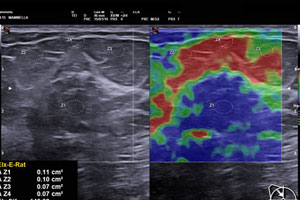
Elastography is an advanced ultrasound-based imaging technique that evaluates tissue stiffness and elasticity. It provides additional information about the internal characteristics of tissues, helping doctors assess various organs and detect abnormalities that may require further evaluation.
At Dr. Dere Sonography & X-Ray Centre, Elastography examinations are performed using advanced ultrasound technology under expert radiological guidance to provide accurate assessment, patient comfort, and reliable diagnostic information.
Unlike conventional ultrasound, Elastography measures tissue stiffness by analyzing how tissues respond to gentle pressure or ultrasound waves. This additional information helps differentiate normal and abnormal tissue characteristics and supports better clinical decision-making.
Elastography is commonly used for evaluating liver health, thyroid nodules, breast lesions, and other soft tissue abnormalities. It is a safe, painless, and non-invasive technique that does not involve radiation exposure.
Conditions Evaluated During Elastography
Elastography helps assess tissue characteristics and provides valuable information for diagnosis and monitoring of various medical conditions.
- Liver fibrosis and chronic liver disease assessment.
- Fatty liver evaluation.
- Thyroid nodule assessment.
- Breast lesion evaluation.
- Soft tissue abnormality assessment.
- Evaluation of tissue stiffness changes.
- Monitoring of chronic organ conditions.
- Assessment of suspicious lesions detected on ultrasound.
- Follow-up evaluation of previously diagnosed conditions.
- Other conditions requiring tissue elasticity assessment.
When is Elastography Recommended?
Your doctor may recommend Elastography when additional information about tissue stiffness is required along with conventional ultrasound findings for accurate diagnosis and treatment planning.
- Assessment of chronic liver disease or fibrosis.
- Evaluation of fatty liver changes.
- Further evaluation of thyroid nodules.
- Assessment of breast lumps or lesions.
- Characterization of suspicious tissue changes.
- Monitoring response to treatment.
- Follow-up of chronic conditions.
- Whenever advised by your physician or specialist.
Signs & Symptoms That May Require Elastography
Elastography may be advised when symptoms, clinical findings, or previous imaging suggest the need for detailed tissue evaluation and assessment of underlying changes.
- Abnormal liver function test results.
- Long-standing liver disease.
- Abdominal discomfort related to liver conditions.
- Thyroid swelling or thyroid nodules.
- Breast lumps requiring further evaluation.
- Changes detected on conventional ultrasound.
- Monitoring progression of chronic diseases.
Why is Elastography Recommended?
Elastography is recommended when doctors need additional information about tissue stiffness and elasticity along with conventional ultrasound findings. It helps in better characterization of tissues, early detection of abnormalities, and accurate monitoring of various medical conditions.
- Provides additional information beyond conventional ultrasound imaging.
- Helps evaluate tissue stiffness and elasticity changes.
- Supports early detection of liver fibrosis and chronic liver changes.
- Assists in evaluating thyroid and breast lesions.
- Helps differentiate normal and abnormal tissue characteristics.
- Useful for monitoring disease progression and treatment response.
- Provides a safe, radiation-free diagnostic option.
- Helps doctors plan further investigations and treatment.
What Does Elastography Assess?
Elastography evaluates the stiffness and elasticity of tissues, providing important diagnostic information about different organs and lesions. It is performed along with ultrasound imaging to improve clinical assessment.
Liver Stiffness Assessment
Elastography helps evaluate liver stiffness and provides valuable information about fibrosis, scarring, and chronic liver disease progression without the need for invasive procedures.
Fatty Liver Evaluation
The examination assists in assessing liver changes associated with fatty liver disease and helps doctors monitor disease severity and progression.
Thyroid Nodule Assessment
Elastography helps evaluate the stiffness characteristics of thyroid nodules along with conventional ultrasound findings to support better clinical decision-making.
Breast Lesion Evaluation
The technique helps assess breast lesions by analyzing tissue stiffness, providing additional information during breast imaging evaluation.
Soft Tissue Evaluation
Elastography can help assess changes in soft tissues and identify areas with altered tissue characteristics requiring further evaluation.
Chronic Disease Monitoring
The procedure helps monitor changes in tissue stiffness over time, allowing doctors to evaluate disease progression or response to treatment.
Lesion Characterization
By assessing tissue elasticity, Elastography provides additional information that may help differentiate between different types of tissue changes.
Overall Tissue Health Assessment
Elastography provides a comprehensive evaluation of tissue properties and supports accurate diagnosis along with other imaging findings.
How is Elastography Performed?
Elastography is a safe, painless, and non-invasive ultrasound-based examination. During the procedure, specialized ultrasound technology measures tissue stiffness and elasticity while the radiologist evaluates the area of interest. The examination usually takes around 15 to 30 minutes.
- Your medical history and previous imaging reports are reviewed before the examination.
- The area being evaluated is identified using ultrasound imaging.
- Special elastography techniques are applied to measure tissue stiffness.
- Multiple measurements may be taken to ensure accurate assessment.
- The findings are analyzed along with conventional ultrasound images.
- A detailed report is prepared to assist your treating doctor.
Benefits of Elastography
Elastography is an advanced diagnostic technique that provides additional tissue information while maintaining patient comfort and safety.
- Non-invasive and painless imaging procedure.
- No radiation exposure.
- Helps assess tissue stiffness accurately.
- Supports early detection of tissue abnormalities.
- Useful alternative to invasive diagnostic procedures in suitable cases.
- Helps monitor chronic conditions over time.
- Provides additional information for better treatment planning.
- Safe for repeated follow-up examinations when required.
Preparation Before Elastography
Elastography is a simple, safe, and comfortable ultrasound-based examination that requires minimal preparation. Following a few basic instructions helps ensure accurate imaging and a smooth diagnostic experience.
- Carry your doctor's prescription along with previous ultrasound reports, medical records, and relevant investigation reports.
- Inform your doctor or radiologist about your medical history and ongoing treatments.
- Depending on the area being examined, fasting may be advised before certain liver-related Elastography examinations.
- Wear comfortable clothing that allows easy access to the examination area.
- Avoid applying creams, lotions, or oils over the area being examined on the day of the procedure.
- Arrive at the diagnostic centre 10 to 15 minutes before your scheduled appointment.
Is Elastography Safe?
Yes. Elastography is a completely safe, painless, and non-invasive imaging technique that uses ultrasound technology to assess tissue stiffness and elasticity. It does not involve radiation exposure and can be safely performed for diagnosis and follow-up evaluation whenever recommended by your doctor.
At Dr. Dere Sonography & X-Ray Centre, Elastography examinations are performed using advanced ultrasound technology while maintaining strict standards of patient comfort, hygiene, safety, and diagnostic accuracy.
Frequently Asked Questions
What is Elastography?
Elastography is an advanced ultrasound-based imaging technique that measures tissue stiffness and elasticity. It provides additional information about tissue characteristics to support accurate diagnosis.
How is Elastography different from normal ultrasound?
Conventional ultrasound evaluates the structure and appearance of organs, while Elastography provides additional information about tissue stiffness and elasticity, helping doctors better assess certain conditions.
Is Elastography painful?
No. Elastography is a painless and non-invasive examination. It is performed using an ultrasound probe placed gently over the area being evaluated.
How long does an Elastography examination take?
Most Elastography examinations are completed within 15 to 30 minutes, depending on the organ being evaluated and the clinical requirement.
Can Elastography replace a biopsy?
Elastography provides valuable diagnostic information and may reduce the need for invasive procedures in some cases. However, the need for biopsy or further investigations depends on individual clinical findings and doctor's advice.
Why Choose Dr. Sameer Dere for Elastography?
- Consultant Radiologist with expertise in advanced ultrasound imaging.
- Advanced Elastography technology for accurate tissue assessment.
- Expert evaluation of liver, thyroid, breast, and soft tissue conditions.
- High-resolution ultrasound imaging with precise interpretation.
- Patient-friendly approach ensuring comfort and privacy during examination.
- Evidence-based reporting to support effective treatment planning.
- Strict hygiene and safety standards during every examination.
- Trusted diagnostic services focused on accuracy and quality patient care.
Advanced Tissue Assessment for Better Diagnosis
Elastography provides valuable information about tissue characteristics that may not always be visible on conventional ultrasound. By assessing tissue stiffness and elasticity, this advanced imaging technique helps doctors detect abnormalities, monitor chronic conditions, and plan appropriate treatment with greater confidence.
Schedule your Elastography with Dr. Sameer Dere at Dr. Dere Sonography & X-Ray Centre for advanced ultrasound imaging, expert diagnosis, and compassionate patient care using modern diagnostic technology.