NT (Nuchal Translucency) Scan
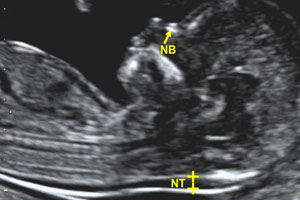
NT (Nuchal Translucency) Scan
An NT (Nuchal Translucency) Scan is an important first-trimester pregnancy ultrasound performed between 11 and 14 weeks of pregnancy. The scan measures the fluid-filled space at the back of the baby's neck, known as the nuchal translucency, and forms an essential part of early fetal screening. When combined with maternal blood tests and clinical assessment, it helps evaluate the baby's risk of certain chromosomal abnormalities while also assessing early fetal development.
At Dr. Dere Sonography & X-Ray Centre, NT Scans are performed by Dr. Prajakta Samir Dere, Consultant Radiologist with specialized expertise in Obstetric, Fetal & Gynecological Imaging. Using high-resolution ultrasound technology and internationally accepted fetal imaging protocols, every examination is performed with exceptional precision to provide accurate and reliable information for both expecting parents and referring obstetricians.
The NT Scan is much more than a routine pregnancy ultrasound. It is one of the most significant screening examinations during early pregnancy, allowing early assessment of fetal well-being, confirmation of gestational age, evaluation of nasal bone, fetal heartbeat, early anatomy, and identification of markers that may indicate an increased risk for chromosomal or structural abnormalities.
Early diagnosis provides valuable information for pregnancy management, allowing your obstetrician to recommend additional investigations only when necessary while giving parents greater confidence and reassurance during this important stage of pregnancy.
Conditions Evaluated During an NT Scan
The NT Scan provides comprehensive first-trimester fetal assessment and helps identify several conditions that may require additional evaluation or follow-up during pregnancy.
- Measurement of Nuchal Translucency Thickness.
- Assessment of the baby's risk for Down Syndrome (Trisomy 21).
- Screening for Trisomy 18 and Trisomy 13.
- Confirmation of fetal viability and heartbeat.
- Accurate gestational age assessment.
- Evaluation of fetal growth and development.
- Assessment of the nasal bone.
- Early fetal anatomical evaluation.
- Assessment of multiple pregnancies.
- Placental location assessment.
- Amniotic fluid evaluation.
- Identification of early structural abnormalities.
When is an NT Scan Recommended?
An NT Scan is recommended for almost every pregnant woman as part of routine first-trimester screening. Your obstetrician may specifically advise this examination between 11 weeks and 13 weeks + 6 days of pregnancy for early fetal assessment and chromosomal risk evaluation.
- Between 11 and 13 weeks + 6 days of pregnancy.
- As part of routine first-trimester screening.
- To assess the baby's risk for chromosomal abnormalities.
- Following a Viability & Dating Scan.
- For women aged 35 years or above.
- When there is a family history of genetic disorders.
- Following IVF or assisted reproductive treatment.
- In twin or multiple pregnancies.
- For pregnancies requiring closer fetal monitoring.
- When advised by your obstetrician as part of comprehensive prenatal screening.
Signs & Symptoms That May Require an NT Scan
Although an NT Scan is routinely recommended during the first trimester, certain maternal or pregnancy-related conditions make this examination even more important. Early fetal screening helps your obstetrician identify pregnancies that may require closer monitoring or additional diagnostic testing.
- Advanced maternal age (35 years or above).
- Previous pregnancy affected by a chromosomal abnormality.
- Family history of genetic or congenital disorders.
- Abnormal findings in previous pregnancy scans.
- Positive first-trimester screening blood tests.
- Pregnancy conceived through IVF or assisted reproductive techniques.
- Twin or multiple pregnancy.
- Maternal medical conditions requiring detailed fetal assessment.
- Recommendation by your obstetrician for comprehensive prenatal screening.
What Does an NT Scan Assess?
An NT Scan is a comprehensive first-trimester ultrasound examination that evaluates several important fetal structures. It provides valuable information regarding your baby's growth, development, and the likelihood of certain chromosomal conditions.
Nuchal Translucency Measurement
The scan measures the thickness of the fluid-filled space behind the baby's neck. An increased NT measurement may be associated with a higher risk of chromosomal abnormalities or certain congenital conditions and may require additional evaluation.
Fetal Heartbeat & Cardiac Activity
The baby's heartbeat is carefully assessed to confirm fetal viability while ensuring the heart is functioning normally during early pregnancy.
Gestational Age Confirmation
Measurements such as the Crown-Rump Length (CRL) help confirm the baby's gestational age and ensure pregnancy progression corresponds with the expected timeline.
Nasal Bone Assessment
The presence and appearance of the fetal nasal bone are evaluated as part of first-trimester chromosomal screening, providing additional information when combined with NT measurement.
Early Fetal Anatomy
The scan provides an initial assessment of major fetal structures including the head, brain, spine, abdominal wall, stomach, bladder, limbs, and umbilical cord to identify significant structural abnormalities at an early stage.
Placenta & Amniotic Fluid
The placental location and amniotic fluid surrounding the baby are examined to ensure the pregnancy is progressing normally.
Multiple Pregnancy Assessment
In twin or multiple pregnancies, the scan evaluates the number of babies, chorionicity, fetal growth, and individual heartbeats, helping guide specialized pregnancy care.
Chromosomal Risk Screening
When combined with maternal blood tests and maternal age, the NT Scan helps estimate the baby's risk for chromosomal conditions such as Down Syndrome (Trisomy 21), Trisomy 18, and Trisomy 13. It is important to remember that this is a screening test and not a definitive diagnostic test.
How is an NT Scan Performed?
The NT Scan is a safe, painless, and non-invasive ultrasound examination performed using high-resolution ultrasound equipment. Most examinations are completed within 20 to 30 minutes, depending on the baby's position and gestational age.
- Your pregnancy history and previous ultrasound reports are reviewed before the examination.
- A transabdominal ultrasound is commonly performed using a comfortably full bladder when required.
- If visualization is limited, a transvaginal ultrasound may occasionally be recommended for better assessment.
- The baby's Crown-Rump Length (CRL) and Nuchal Translucency thickness are carefully measured.
- Fetal heartbeat, nasal bone, placenta, amniotic fluid, and early anatomy are thoroughly evaluated.
- A detailed report is prepared and shared with your obstetrician for further pregnancy management.
Benefits of an NT Scan
The NT Scan is considered one of the most valuable prenatal screening examinations because it provides essential information about your baby's health during the first trimester.
- Early assessment of fetal well-being.
- Accurate first-trimester fetal screening.
- Evaluation of chromosomal risk markers.
- Early detection of significant structural abnormalities.
- Confirmation of fetal heartbeat and healthy pregnancy progression.
- Assessment of twin and multiple pregnancies.
- Supports timely medical decision-making when additional investigations are required.
- Provides reassurance and confidence to expecting parents during the first trimester.
Preparation Before an NT Scan
Preparing for an NT Scan is simple and helps obtain the clearest possible ultrasound images. Our team will provide specific instructions based on your stage of pregnancy and your doctor's recommendations to ensure a comfortable and accurate examination.
- Carry your doctor's prescription, previous ultrasound reports, and blood test reports, if available.
- A comfortably full bladder may be recommended, especially during the early weeks of pregnancy.
- Wear loose and comfortable clothing for easy access during the ultrasound examination.
- Arrive at the diagnostic centre 10–15 minutes before your scheduled appointment.
- Follow any additional preparation instructions provided by your obstetrician or radiologist.
Is an NT Scan Safe?
Yes. An NT Scan is a completely safe, painless, and non-invasive ultrasound examination that uses high-frequency sound waves rather than radiation. It is routinely recommended worldwide as part of first-trimester prenatal screening and poses no known risk to either the mother or the developing baby when performed by qualified healthcare professionals.
At Dr. Dere Sonography & X-Ray Centre, every NT Scan is performed using advanced ultrasound technology while adhering to internationally accepted fetal imaging guidelines to ensure accurate diagnosis, patient comfort, and fetal safety.
Frequently Asked Questions
When should an NT Scan be performed?
The ideal time for an NT Scan is between 11 weeks and 13 weeks + 6 days of pregnancy, when the baby's Crown-Rump Length (CRL) falls within the recommended range for accurate screening.
Can an NT Scan diagnose Down Syndrome?
No. An NT Scan is a screening examination that estimates the baby's risk for chromosomal abnormalities. If the risk is increased, your obstetrician may recommend additional diagnostic tests such as NIPT, CVS, or Amniocentesis.
Is the NT Scan painful?
No. The examination is completely painless and usually takes about 20 to 30 minutes, depending on the baby's position during the scan.
Do I need a full bladder for the scan?
A comfortably full bladder may be advised during early pregnancy to improve image quality. Our team will guide you regarding the preparation before your appointment.
Can the baby's gender be determined during an NT Scan?
The primary purpose of an NT Scan is first-trimester fetal screening and assessment of chromosomal risk. Determination of fetal gender is not the objective of this examination and may not be reliable at this stage of pregnancy.
Why Choose Dr. Prajakta Samir Dere for an NT Scan?
- Consultant Radiologist with specialized expertise in Obstetric, Fetal & Gynecological Imaging.
- Extensive experience in first-trimester fetal screening and prenatal ultrasound.
- Comprehensive assessment of Nuchal Translucency, Nasal Bone, Fetal Heartbeat, and Early Fetal Anatomy.
- Advanced high-resolution ultrasound technology for accurate fetal evaluation.
- Evidence-based reporting following internationally accepted obstetric imaging protocols.
- Compassionate, patient-focused care in a comfortable and reassuring environment.
- Detailed and timely reports to assist your obstetrician in planning the next stage of pregnancy care.
- Trusted prenatal imaging services for routine and high-risk pregnancies.
Book Your NT Scan Appointment Today
The NT Scan is one of the most important milestones in early pregnancy, providing valuable information about your baby's health and development during the first trimester. Early prenatal screening helps identify potential concerns, supports informed clinical decisions, and offers reassurance to expecting parents throughout their pregnancy journey.
Schedule your NT (Nuchal Translucency) Scan with Dr. Prajakta Samir Dere at Dr. Dere Sonography & X-Ray Centre for expert fetal imaging, accurate prenatal screening, and compassionate pregnancy care using advanced ultrasound technology.