
Level II Anomaly Scan
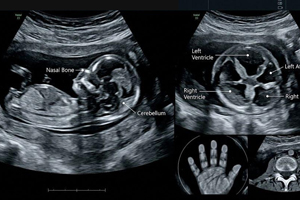
Level II Anomaly Scan
A Level II Anomaly Scan, also known as the Targeted Anomaly Scan (TIFFA Scan), is one of the most important ultrasound examinations performed during pregnancy. Usually carried out between 18 and 22 weeks of gestation, this detailed scan evaluates your baby's organs, growth, anatomy, and overall development. It plays a vital role in identifying structural abnormalities at an early stage, allowing timely medical guidance and better pregnancy planning.
At Dr. Dere Sonography & X-Ray Centre, the Level II Anomaly Scan is performed by Dr. Prajakta Samir Dere, Consultant Radiologist with specialized expertise in Obstetric, Fetal & Gynecological Imaging. Using advanced high-resolution ultrasound technology and internationally accepted fetal imaging protocols, every examination is conducted with exceptional precision to provide a detailed assessment of your baby's development while ensuring complete comfort and reassurance for expecting parents.
The Level II Anomaly Scan is far more comprehensive than a routine pregnancy ultrasound. It carefully examines the baby's brain, face, spine, heart, lungs, kidneys, stomach, urinary bladder, limbs, abdominal wall, umbilical cord, placenta, cervix, and amniotic fluid. This detailed assessment helps detect many congenital abnormalities, evaluate fetal growth, and confirm that pregnancy is progressing normally.
While no ultrasound can guarantee the detection of every condition, a Level II Anomaly Scan significantly improves the early identification of structural abnormalities and provides valuable information that helps your obstetrician plan the safest possible pregnancy care for both mother and baby.
Conditions Evaluated During a Level II Anomaly Scan
The Level II Anomaly Scan provides a comprehensive evaluation of fetal anatomy and maternal pregnancy health. It helps identify congenital abnormalities, monitor fetal growth, and assess the baby's overall well-being during the second trimester.
- Detailed examination of the fetal brain and skull.
- Assessment of facial structures including lips, nose, and profile.
- Evaluation of the fetal spine for neural tube defects.
- Detailed assessment of the fetal heart and four-chamber view.
- Evaluation of lungs and diaphragm.
- Assessment of stomach, liver, bowel, and abdominal wall.
- Examination of both kidneys and urinary bladder.
- Evaluation of upper and lower limbs, hands, and feet.
- Assessment of fetal growth and biometric measurements.
- Placental position and maturity assessment.
- Amniotic fluid volume evaluation.
- Umbilical cord insertion and blood vessel assessment.
- Cervical length assessment when clinically indicated.
- Screening for major congenital and structural abnormalities.
When is a Level II Anomaly Scan Recommended?
A Level II Anomaly Scan is recommended for every pregnant woman as part of routine antenatal care. It is ideally performed between 18 and 22 weeks of pregnancy, when the baby's organs are sufficiently developed for a detailed anatomical evaluation.
- As a routine second-trimester pregnancy scan.
- Between 18 and 22 weeks of gestation.
- Following a normal NT Scan and first-trimester screening.
- For women with high-risk pregnancies.
- When there is a family history of congenital abnormalities.
- For pregnancies conceived through IVF or assisted reproductive techniques.
- For twin or multiple pregnancies requiring detailed fetal evaluation.
- When previous ultrasound findings require further assessment.
- To evaluate fetal growth, organ development, and placental health.
- Whenever recommended by your obstetrician for comprehensive fetal anomaly screening.
Signs & Symptoms That May Require a Detailed Level II Anomaly Scan
Although a Level II Anomaly Scan is routinely recommended for every pregnant woman, certain maternal and fetal conditions make this examination even more important. A detailed fetal anatomical assessment helps identify potential concerns at an early stage, allowing your obstetrician to plan appropriate pregnancy management and follow-up care.
- Abnormal findings on an earlier pregnancy ultrasound.
- Increased risk identified during the NT Scan or first-trimester screening.
- Maternal age of 35 years or above.
- Family history of congenital or genetic disorders.
- Pregnancy conceived through IVF or assisted reproductive techniques.
- Maternal diabetes, hypertension, thyroid disorders, or autoimmune diseases.
- Previous pregnancy affected by congenital abnormalities.
- Twin or multiple pregnancy requiring detailed fetal evaluation.
- Any pregnancy classified as high-risk by your obstetrician.
What Does a Level II Anomaly Scan Assess?
A Level II Anomaly Scan is one of the most comprehensive prenatal ultrasound examinations. It evaluates every major organ system of your baby, helping detect structural abnormalities while confirming normal fetal growth and development.
Brain & Skull Assessment
The baby's brain, skull, ventricles, cerebellum, and other intracranial structures are carefully examined to identify developmental abnormalities and ensure normal neurological development.
Face, Nose & Lips
The fetal facial profile, nasal bone, lips, eye sockets, and facial symmetry are evaluated to screen for conditions such as cleft lip and other craniofacial abnormalities.
Heart Examination
A detailed evaluation of the fetal heart includes assessment of the four chambers, outflow tracts, heart rhythm, cardiac position, and major blood vessels to identify congenital heart defects whenever possible.
Spine & Neural Tube
The entire fetal spine is examined from the cervical to sacral region to detect neural tube defects such as spina bifida and other spinal abnormalities.
Chest & Diaphragm
The lungs, diaphragm, and chest cavity are assessed to ensure normal fetal thoracic development and identify structural abnormalities affecting breathing after birth.
Abdominal Organs
The stomach, liver, intestines, abdominal wall, kidneys, urinary bladder, and umbilical cord insertion are carefully evaluated to ensure proper organ formation and function.
Upper & Lower Limbs
The baby's arms, legs, hands, fingers, feet, and long bones are measured and examined to evaluate normal skeletal growth and identify limb abnormalities.
Placenta & Amniotic Fluid
The placental location, placental appearance, umbilical cord, and amniotic fluid volume are assessed to ensure adequate support for your baby's growth throughout pregnancy.
Fetal Growth Assessment
Detailed fetal biometric measurements, including head circumference, abdominal circumference, femur length, and estimated fetal weight, are recorded to confirm that your baby is growing appropriately for the gestational age.
How is a Level II Anomaly Scan Performed?
The Level II Anomaly Scan is a detailed, safe, and painless ultrasound examination performed using advanced high-resolution ultrasound equipment. Depending on the baby's position, the examination usually takes between 30 and 45 minutes, allowing the radiologist to carefully evaluate every major fetal organ.
- Your pregnancy history and previous ultrasound reports are reviewed before the examination.
- A water-based ultrasound gel is applied over the abdomen to improve image quality.
- A high-resolution ultrasound probe is moved gently over the abdomen to obtain detailed fetal images.
- Each major fetal organ is examined systematically according to international fetal imaging protocols.
- Fetal biometric measurements are recorded to assess growth and development.
- The placenta, amniotic fluid, cervix, and umbilical cord are evaluated.
- A comprehensive diagnostic report is prepared and shared with your obstetrician for further pregnancy management.
Benefits of a Level II Anomaly Scan
The Level II Anomaly Scan is one of the most valuable prenatal investigations because it provides a detailed assessment of your baby's anatomy and overall well-being while supporting informed clinical decision-making.
- Comprehensive evaluation of fetal anatomy.
- Early detection of major congenital and structural abnormalities.
- Assessment of fetal growth and developmental milestones.
- Detailed examination of the fetal heart, brain, spine, kidneys, limbs, and abdominal organs.
- Evaluation of placental health and amniotic fluid volume.
- Supports early pregnancy planning and appropriate medical management.
- Provides reassurance to parents regarding the baby's development.
- Facilitates timely referral for specialized fetal care whenever required.
Preparation Before a Level II Anomaly Scan
A Level II Anomaly Scan requires very little preparation. Following a few simple instructions helps obtain high-quality ultrasound images and ensures a smooth examination. Our team will guide you regarding any specific preparation based on your pregnancy and your obstetrician's recommendations.
- Carry your doctor's prescription, previous ultrasound reports, and antenatal records.
- A comfortably full bladder may be advised in certain cases, depending on the stage of pregnancy.
- Wear loose and comfortable clothing to allow easy access during the examination.
- Reach the diagnostic centre 10–15 minutes before your scheduled appointment.
- Do not worry if the scan takes longer than a routine ultrasound, as every organ is examined carefully.
- Follow any additional instructions provided by your obstetrician or radiologist.
Is a Level II Anomaly Scan Safe?
Yes. A Level II Anomaly Scan is a completely safe and non-invasive ultrasound examination that uses high-frequency sound waves instead of radiation. It is routinely recommended worldwide as part of standard antenatal care and poses no known risk to either the mother or the developing baby when performed by experienced healthcare professionals.
At Dr. Dere Sonography & X-Ray Centre, every examination is performed using advanced high-resolution ultrasound systems while following internationally accepted fetal imaging guidelines to ensure accurate diagnosis, patient comfort, and fetal safety.
Frequently Asked Questions
When should a Level II Anomaly Scan be performed?
The ideal time for a Level II Anomaly Scan is between 18 and 22 weeks of pregnancy, when the baby's organs are sufficiently developed for a detailed anatomical evaluation.
Can this scan detect all birth defects?
A Level II Anomaly Scan can detect many major structural abnormalities before birth. However, no ultrasound examination can identify every congenital condition or genetic disorder with complete certainty.
How long does the examination take?
Most Level II Anomaly Scans take approximately 30 to 45 minutes. The duration may vary depending on the baby's position, fetal movements, and the need for additional imaging.
Will I be able to see my baby during the scan?
Yes. During the examination, parents are usually able to see their baby on the ultrasound monitor while the radiologist performs the detailed anatomical assessment.
Will I need additional tests after this scan?
Most pregnancies require no further investigations after a normal Level II Anomaly Scan. However, if any abnormality or increased risk is identified, your obstetrician may recommend additional fetal imaging or specialized diagnostic tests.
Why Choose Dr. Prajakta Samir Dere for a Level II Anomaly Scan?
- Consultant Radiologist with specialized expertise in Obstetric, Fetal & Gynecological Imaging.
- Extensive experience in detailed fetal anomaly screening and prenatal ultrasound.
- Comprehensive evaluation of the fetal brain, heart, spine, kidneys, limbs, face, and all major organ systems.
- Advanced high-resolution ultrasound technology for superior fetal imaging.
- Detailed, evidence-based reporting following internationally accepted obstetric imaging protocols.
- Personalized, compassionate care with clear communication throughout the examination.
- Timely and clinically reliable reports to support your obstetrician in pregnancy management.
- Trusted fetal imaging services for routine, high-risk, singleton, and multiple pregnancies.
Book Your Level II Anomaly Scan Today
A Level II Anomaly Scan is one of the most important milestones in pregnancy, providing a detailed assessment of your baby's growth, anatomy, and overall development. Early identification of structural abnormalities supports informed clinical decisions and helps ensure the best possible care for both mother and baby throughout pregnancy.
Book your Level II Anomaly Scan with Dr. Prajakta Samir Dere at Dr. Dere Sonography & X-Ray Centre for expert fetal imaging, comprehensive prenatal screening, and compassionate pregnancy care using advanced ultrasound technology.